Agarbatti vs Dhoop: Which Incense for Which Occasion?
Walk into any agarbatti shop in Mysuru or Bangalore and you'll be presented with hundreds of fragrances. Most of them are synthetic — perfumed bamboo sticks dipped in cheap oils. A real agarbatti, by contrast, is made of natural plant material rolled around a thin bamboo core, lightly scented with attars and essential oils. The difference is unmistakable from the first stick.
What makes an agarbatti "natural"?
- The base is jigat (a natural plant gum), charcoal, sandalwood powder, and herb dust — not synthetic perfume binders.
- The fragrance comes from real attar oils — distilled rose, distilled sandalwood, mogra, or kasturi — not from synthetic alcohols.
- The smoke is light grey, not dark or oily. Black, sticky smoke is a sign of heavy synthetic content.
- The ash is white-grey and crumbly. It does not stain a clean white surface.
If your incense leaves a dark mark on the wall above the holder, or your eyes water from the smoke, it's almost certainly a synthetic stick.
Choosing by occasion
The four classic devotional fragrances each have a moment they're best suited to. Here's how to think about them.
Chandan (Sandalwood) — the universal daily choice
If you only ever buy one agarbatti, make it sandalwood. It's the most neutral, the most calming, and the safest in any context — daily puja, study, meditation, or simply opening a stale room. Sandalwood is also believed to be cooling, which is why it dominates the south Indian tradition.
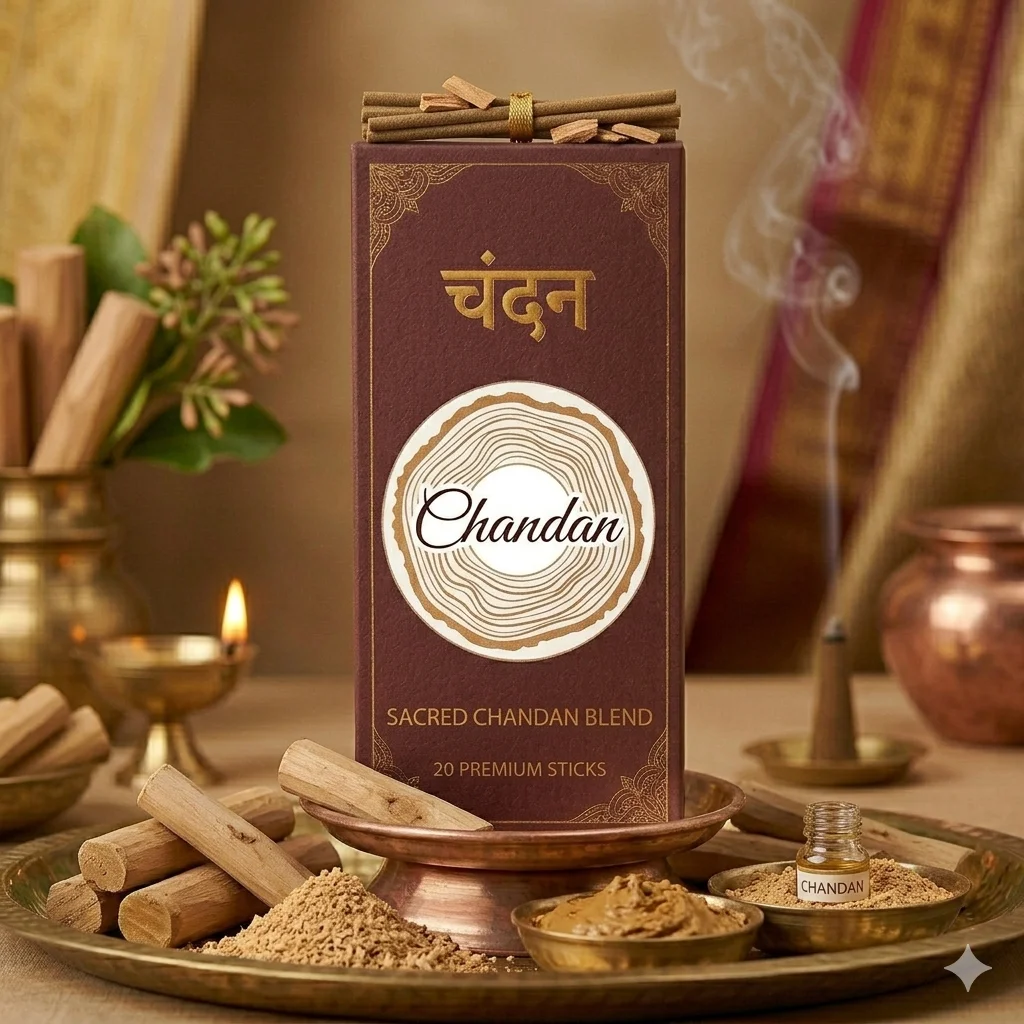
Pure Mysore sandalwood incense — creamy, balsamic, meditative. The sage's incense.
Gulab (Rose) — for Lakshmi and for Friday puja
Rose is sacred to Lakshmi and to Radha. It is the natural fragrance for Friday evening puja, for any ritual involving abundance or prosperity, and for the entire Diwali week. Rose agarbatti pairs beautifully with the Lakshmi and Krishna shelves.
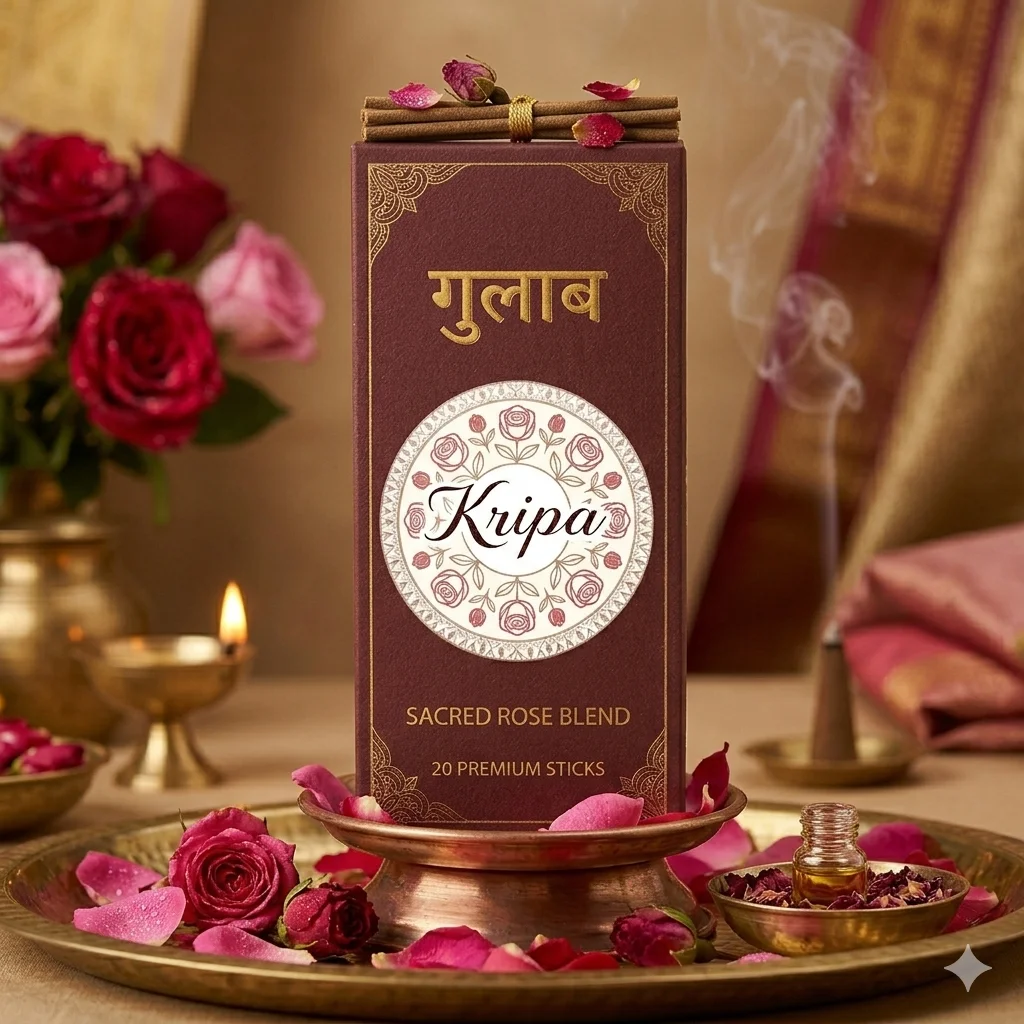
Damask rose petal incense — soft, floral, and unmistakably feminine. The fragrance of every Lakshmi puja.
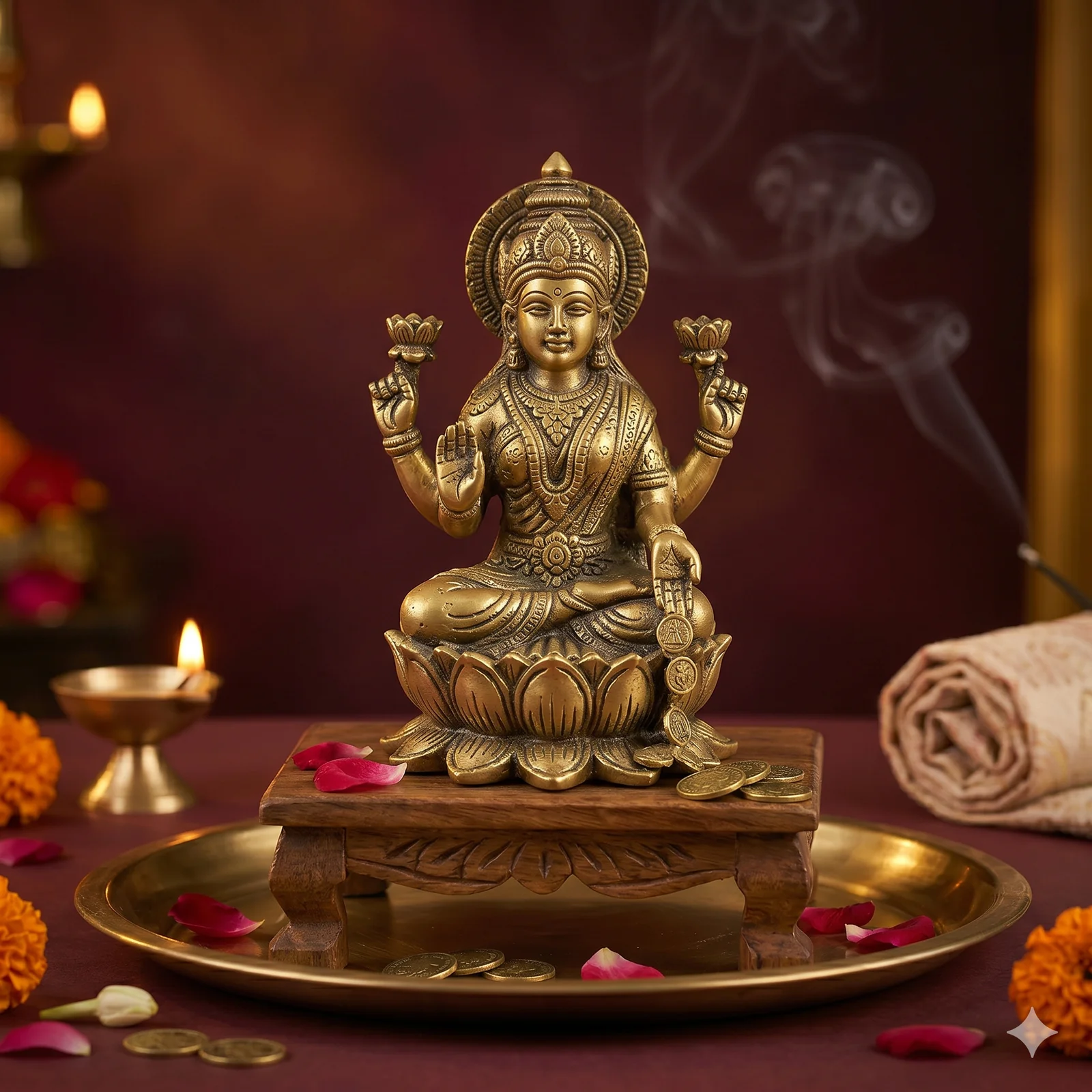
Seated Lakshmi on a lotus throne, four-armed, pouring coins from the lower-left palm — the giver of prosperity and abundance.
Bela (Mogra / Jasmine) — for evenings and summer aartis
Mogra is the night-flower. Its fragrance is opened by the cool evening air — light it after sunset, during the evening aarti, or on warm nights when the windows are open. It is also the traditional fragrance for weddings and engagement ceremonies.
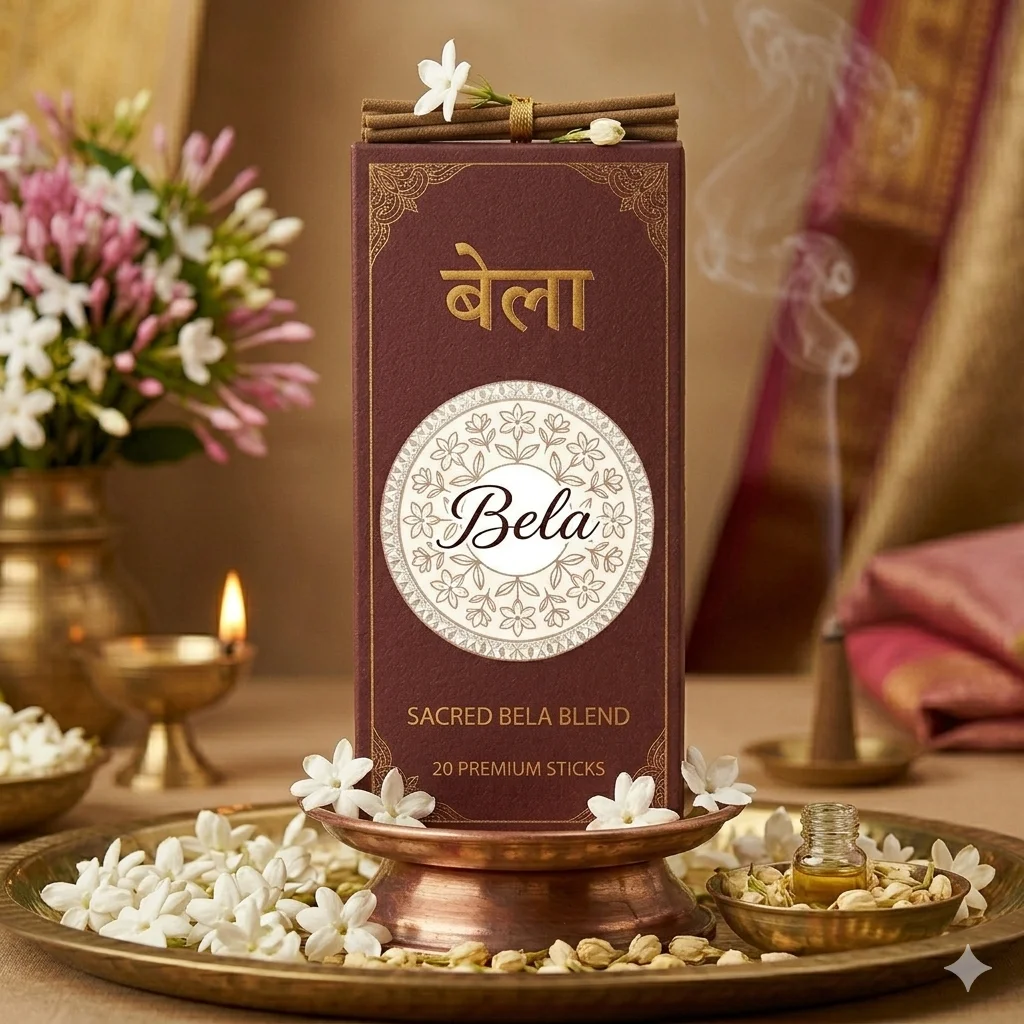
Indian jasmine incense — sweet, narcotic, and intoxicating. The night-bloomer's prayer.
Kasturi (Musk) — for winter and for late-night sadhana
Kasturi is the deepest of the four. It carries weight in cold air, fills a room slowly, and lingers for hours after the stick has burned out. Use it for winter mornings, for late-night meditation, and for Shivaratri puja.
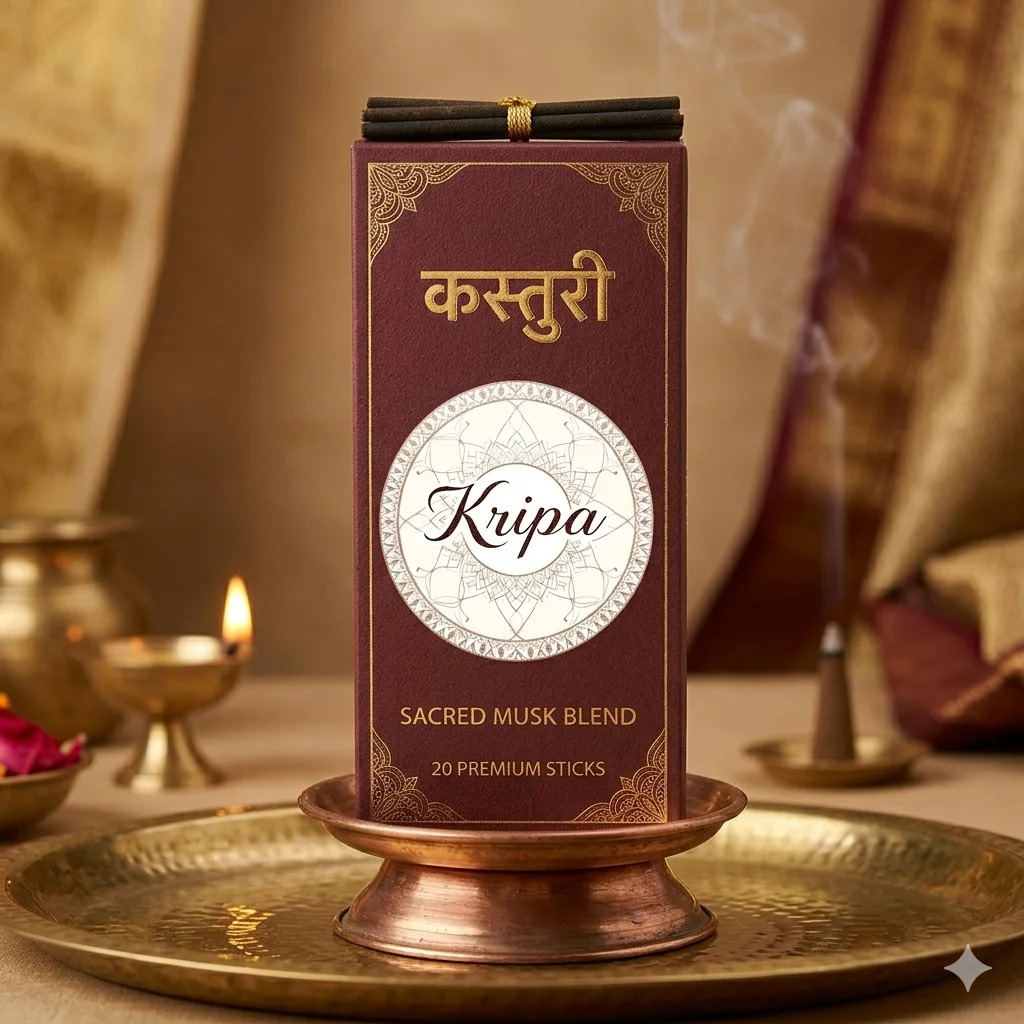
Hand-rolled musk-blend incense — deep, animalic warmth that settles the room into stillness.
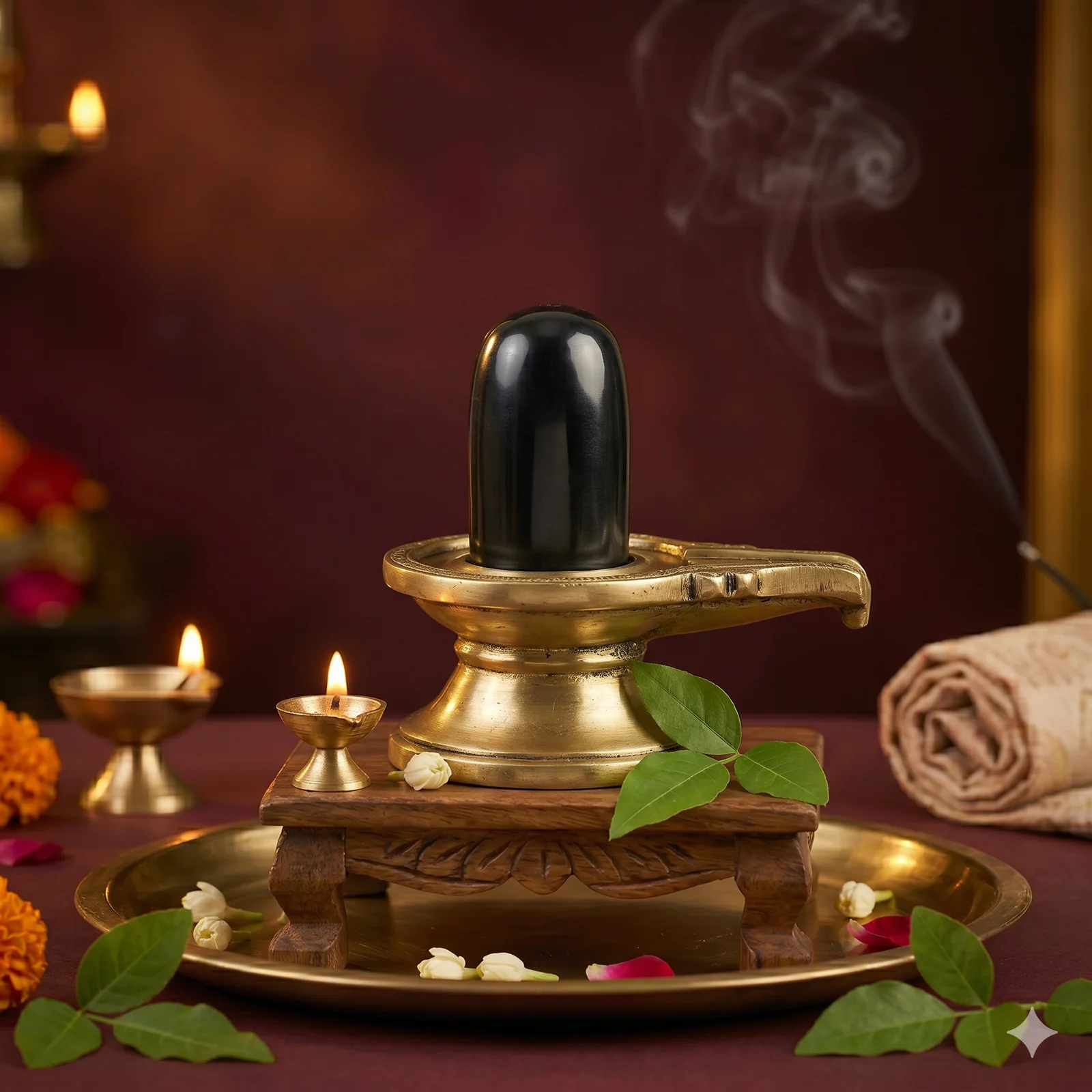
Hand-carved black marble Lingam seated in a brass yoni-pitha — the formless form of Shiva, the eternal point of meditation.
How to light and place an agarbatti
- Light it from the diya flame — never from a lighter held under the stick, which leaves a residue.
- Let the flame catch the tip, then gently blow it out. The stick should glow red and begin to smoke.
- Place it in the agarbatti holder, angled upward, well away from curtains, paper, or the murti itself.
- One stick is enough for a daily puja. Two or three for an aarti. Never light more than four at once — the smoke becomes heavy and the fragrance muddles.
How to store agarbatti
Keep packs sealed in their plastic sleeve, in a cool, dry cupboard. Heat and humidity weaken the fragrance — never store agarbatti above the stove or in direct sunlight. A well-stored pack will hold its scent for over a year.
One small ritual
Light a single sandalwood stick at the same time every morning — say, while the kettle boils. After a week you'll notice the smell registers before you've even thought about it. After a month, the absence of it will feel wrong. That's the entire point of fragrance in puja: it doesn't add anything to the ritual; it becomes the ritual.