
Why Brass Murtis Belong in Every Hindu Home
Walk into any traditional Hindu household — north, south, east, or west — and you'll almost certainly find at least one brass murti on the puja shelf. There's a reason this single alloy has dominated Indian devotional craft for over two millennia, and the reason is both spiritual and surprisingly scientific.
The metal of devotion
Brass is an alloy of copper and zinc. In the Indian tradition it's known as peetal, and it's considered auspicious for several reasons:
- It is naturally antimicrobial. Copper ions are toxic to bacteria — this is why traditional water vessels (lota, kalash) were always made of brass or copper. A brass murti stays cleaner over time.
- It does not rust. Iron stains and corrodes, silver tarnishes; brass simply develops a soft patina that many devotees consider more beautiful with age.
- It rings. Strike a brass surface and it sings with a long, clear tone. This is why temple bells, ghantis, and aarti plates are all brass — the sound is believed to dispel negative vibrations.
- It holds heat gently. A brass diya warms slowly and evenly, never cracking the way clay can.
The four murtis to begin with
Tradition suggests starting your puja shelf with a small set of complementary deities, not a single one. Each has a specific role.
Ganesha — the obstacle remover
Always invoked first. A small brass Ganesha sits at the entrance of the puja shelf and at the start of every ritual.
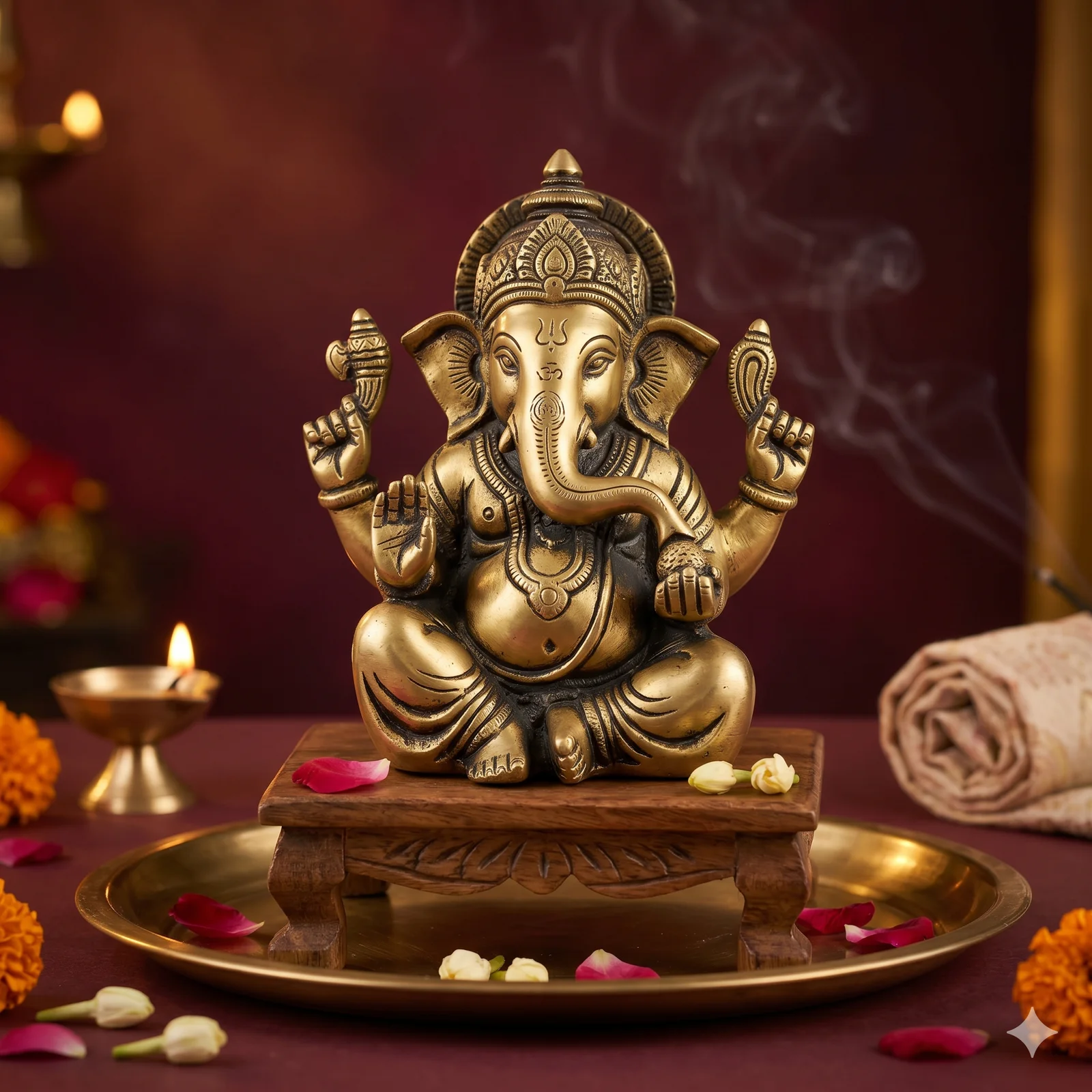
Hand-cast solid brass Ganesh in classical seated form — the remover of obstacles, the patron of new beginnings.
Lakshmi — the bringer of abundance
Lakshmi is invited daily, but especially on Fridays and through the entire month leading to Diwali. She prefers a clean, well-lit corner — keep her shelf dust-free, and she'll never leave.
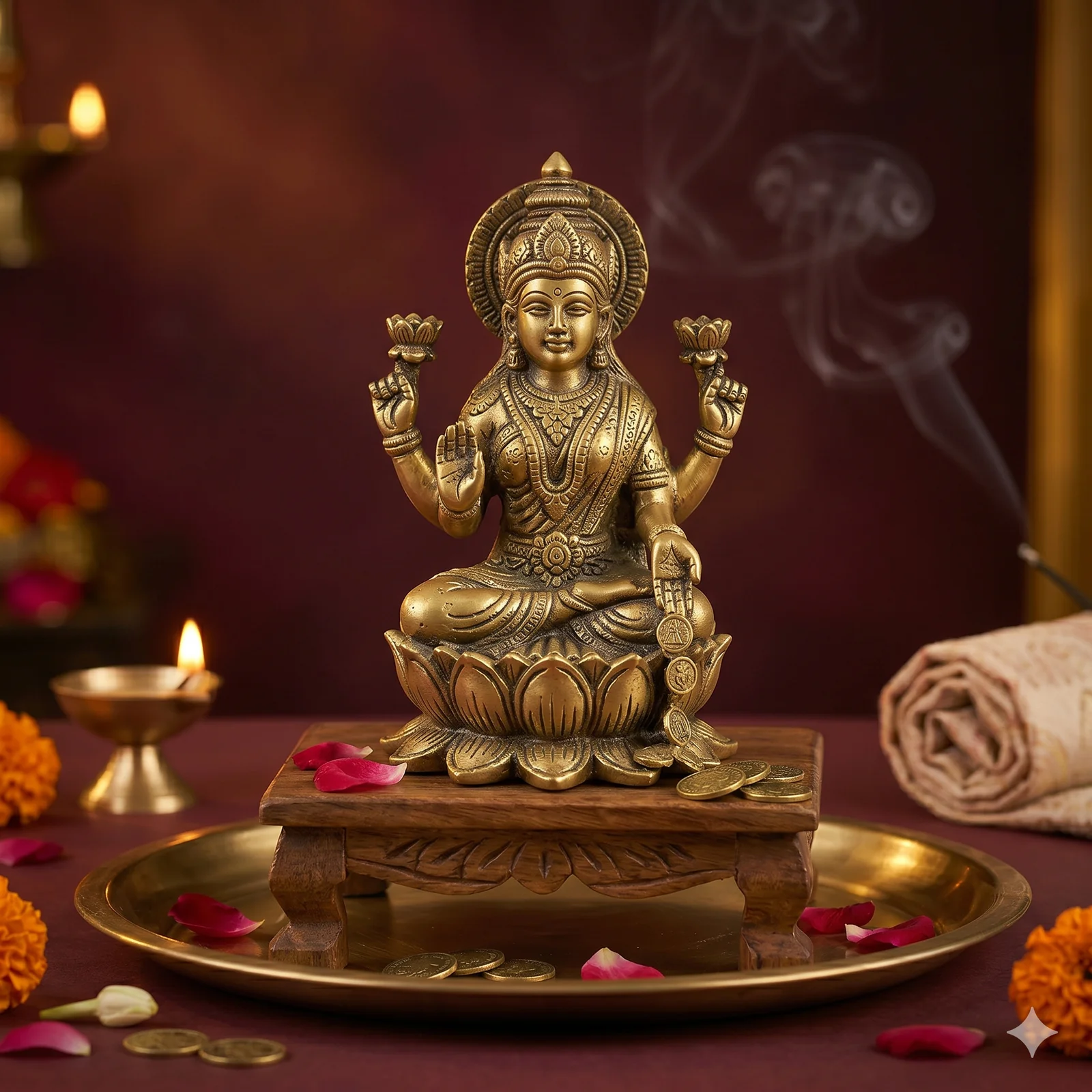
Seated Lakshmi on a lotus throne, four-armed, pouring coins from the lower-left palm — the giver of prosperity and abundance.
Krishna — the joy of devotion
Krishna with his flute (Murlidhar) is the universal symbol of love and play in Hindu thought. Many families place a small Krishna near the kitchen — he is, after all, fond of butter.
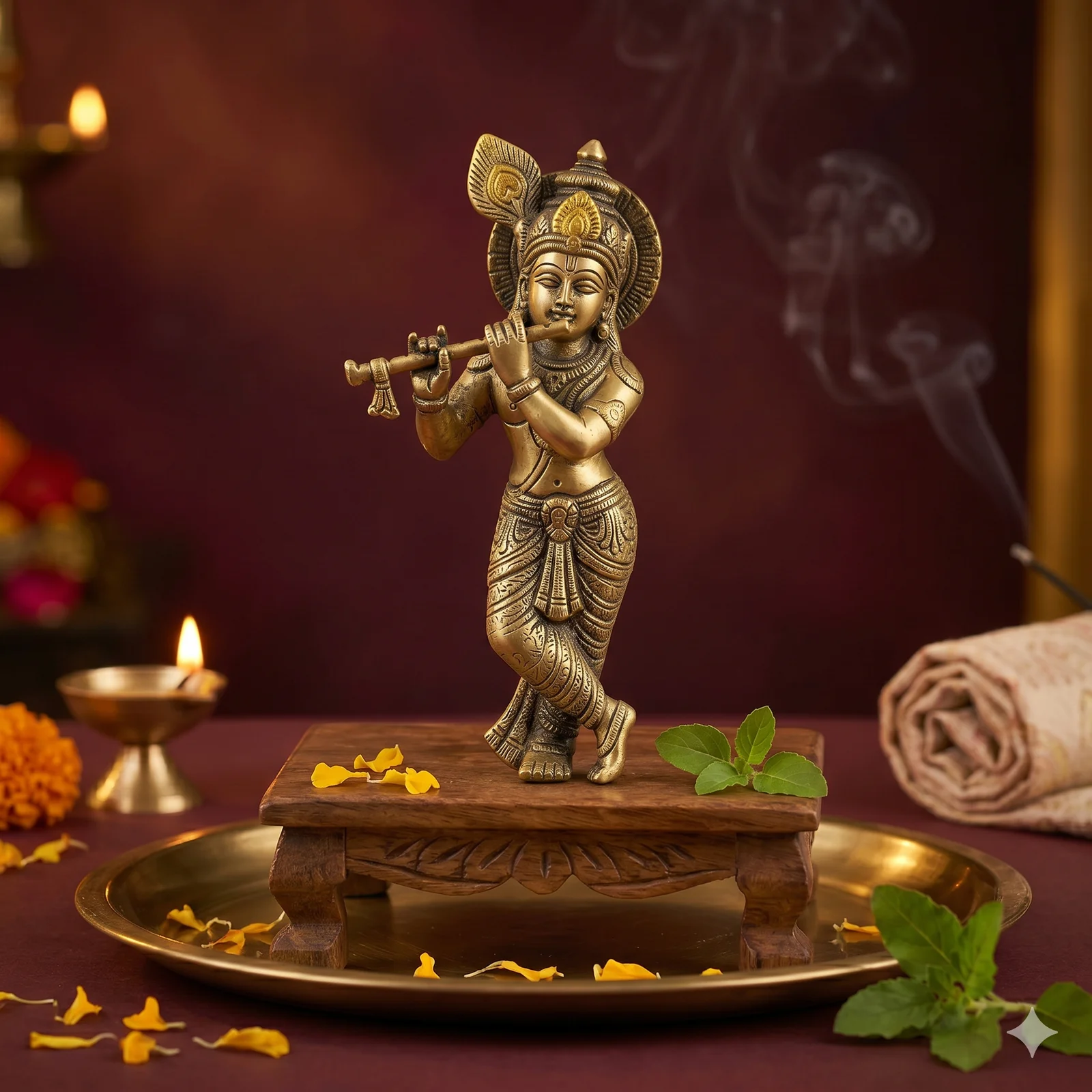
Standing Krishna in classical tribhanga pose, lifting bansuri to his lips — the eternal cowherd, the divine flautist.
Hanuman — the protector of the home
A Hanuman murti is traditionally placed facing the entrance of the home or the puja shelf. He is the Sankat Mochan — remover of troubles — and his presence is believed to guard the household.
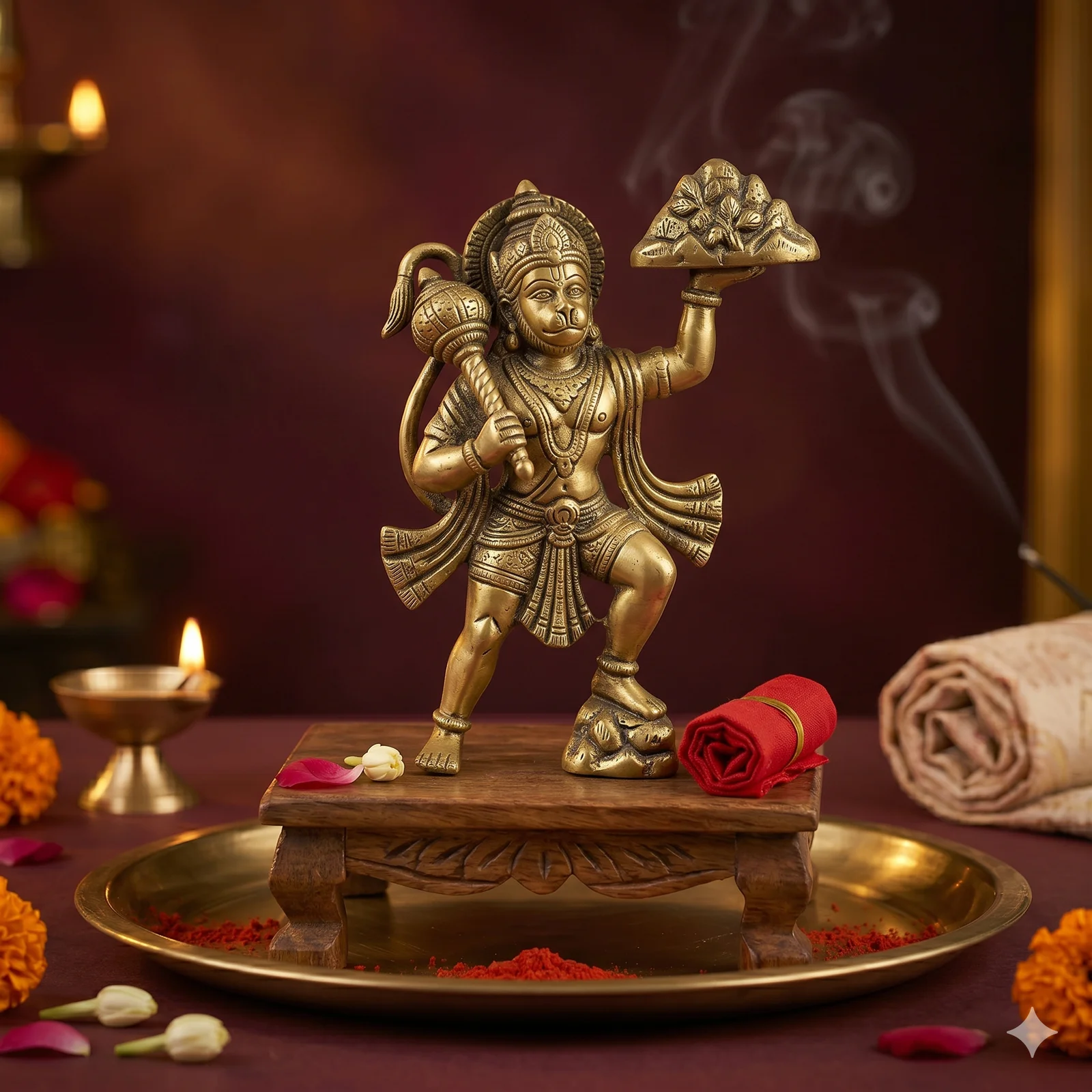
Standing Hanuman lifting the Sanjeevani mountain, gada in hand — the embodiment of devotion, strength, and unbroken service.
How to care for a brass murti
Brass is forgiving but not maintenance-free. A few simple practices will keep your murtis looking their best for decades:
- Wipe daily with a soft, dry cotton cloth.
- Polish monthly with a paste of lemon juice and salt, or a pinch of imli (tamarind) and warm water. Rinse thoroughly and dry immediately.
- Avoid harsh chemicals — modern brass cleaners can strip the patina and leave a chemical smell that lingers in puja.
- Anointing with ghee is traditional and protective. A drop rubbed gently onto the murti keeps it from drying and adds a subtle, sattvic glow.
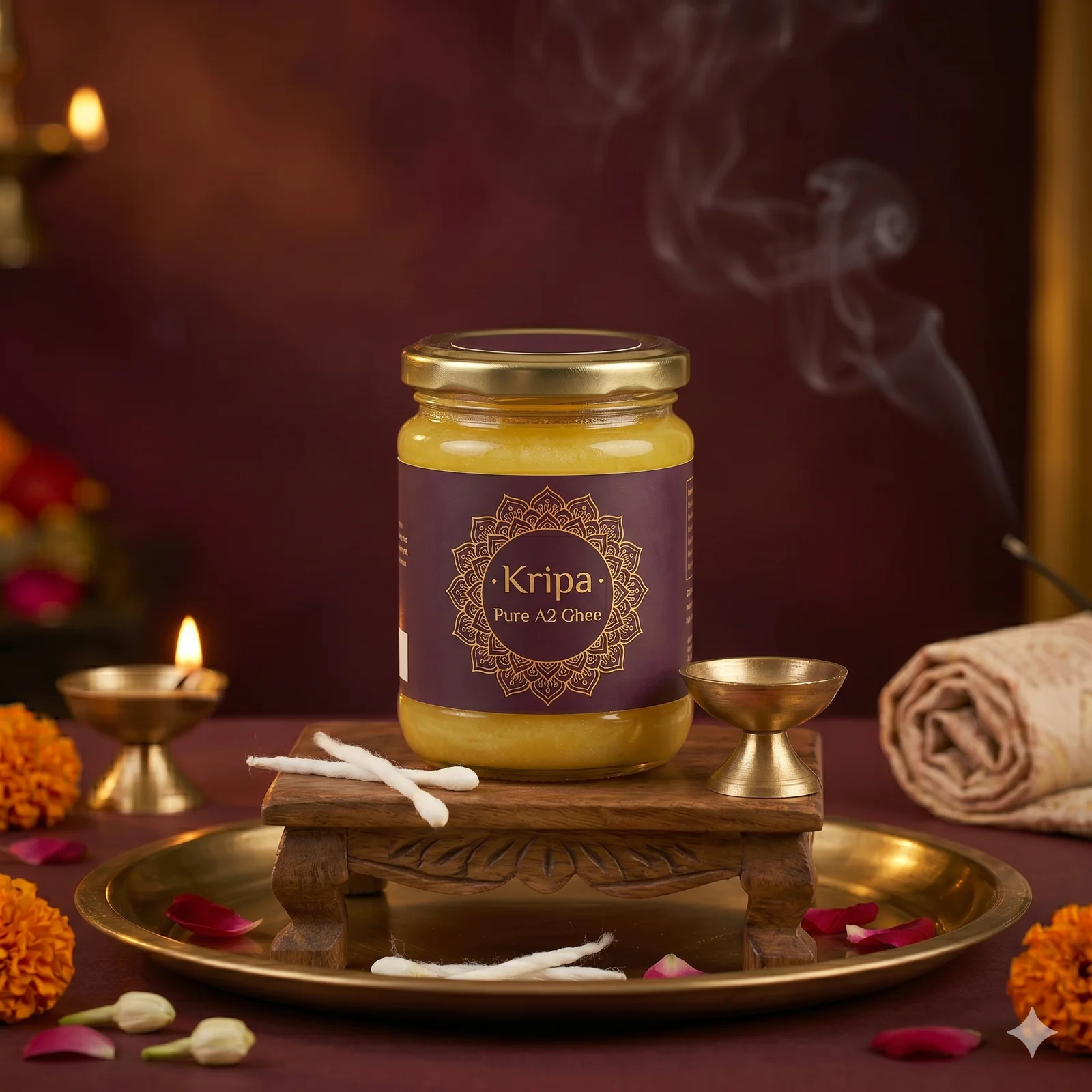
Bilona-churned A2 cow ghee — the pure ghee for diya, abhishekam, and Ayurvedic anointing. Liquid gold from indigenous breeds.
The bell completes the shelf
No brass puja shelf is complete without a small ghanti (bell). It is rung at the start and end of aarti — its long, sustained tone is said to clear the mind and call attention to the divine.
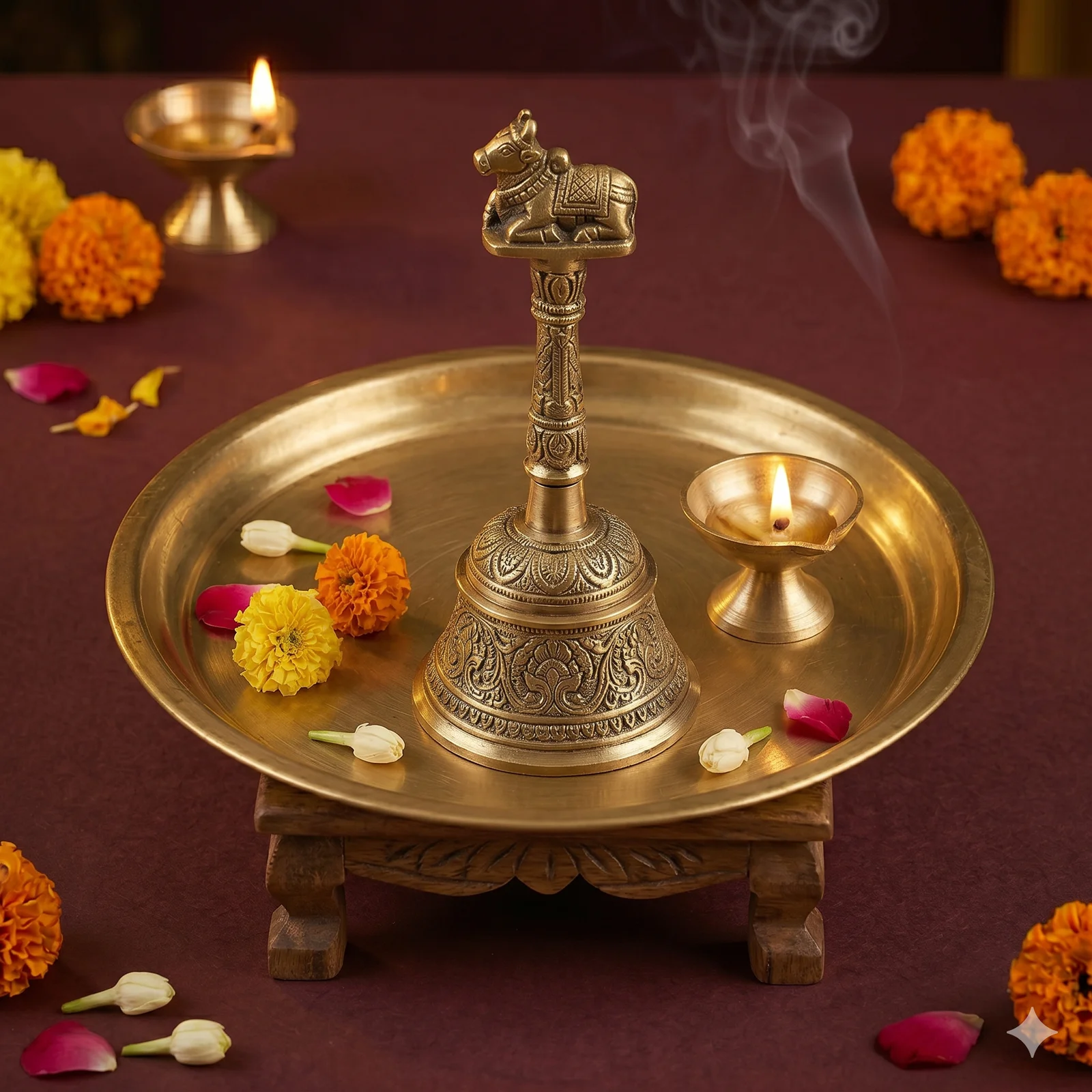
Ornate brass ghanti with Nandi finial — the sound that announces the deity, awakens the room, and seals the aarti.
You don't need a hundred murtis. Four well-cast brass figures, kept clean and lit by a single diya, is more powerful than a crowded shelf. Start small, polish lovingly, and let the patina of time do the rest.