
How to Set Up Your First Daily Puja Corner at Home
Most homes in India have a puja space, but very few have a daily ritual that actually sticks. The reason is rarely lack of devotion — it's usually that the corner wasn't set up to make ten quiet minutes feel inevitable. This guide walks through exactly that: a small, sattvic corner you'll want to sit at every morning.
Where to place your puja corner
The traditional choice is the north-east (Ishaan) corner of your home. This direction is associated with clarity, learning, and the rising sun — and pragmatically, it's usually the calmest part of the house. If that's not possible, the east wall is the next best, so you face east while seated.
Avoid placing the corner directly under a beam, against a bathroom wall, or below the staircase. The space should feel still, not transitional.
The five essentials
You don't need a full mandir to begin. A clean wooden chowki, a small cloth, and these five items are enough for a complete daily puja:
- A murti or framed image of your ishta devata (chosen deity).
- A diya for light — the steady flame anchors the entire ritual.
- Pure ghee to fuel the diya — never refined oil.
- Cotton wicks (batti) — long ones if you want a longer-lasting flame.
- Agarbatti or dhoop for fragrance and to clear the air around the seat.
Start with one murti — Ganesha
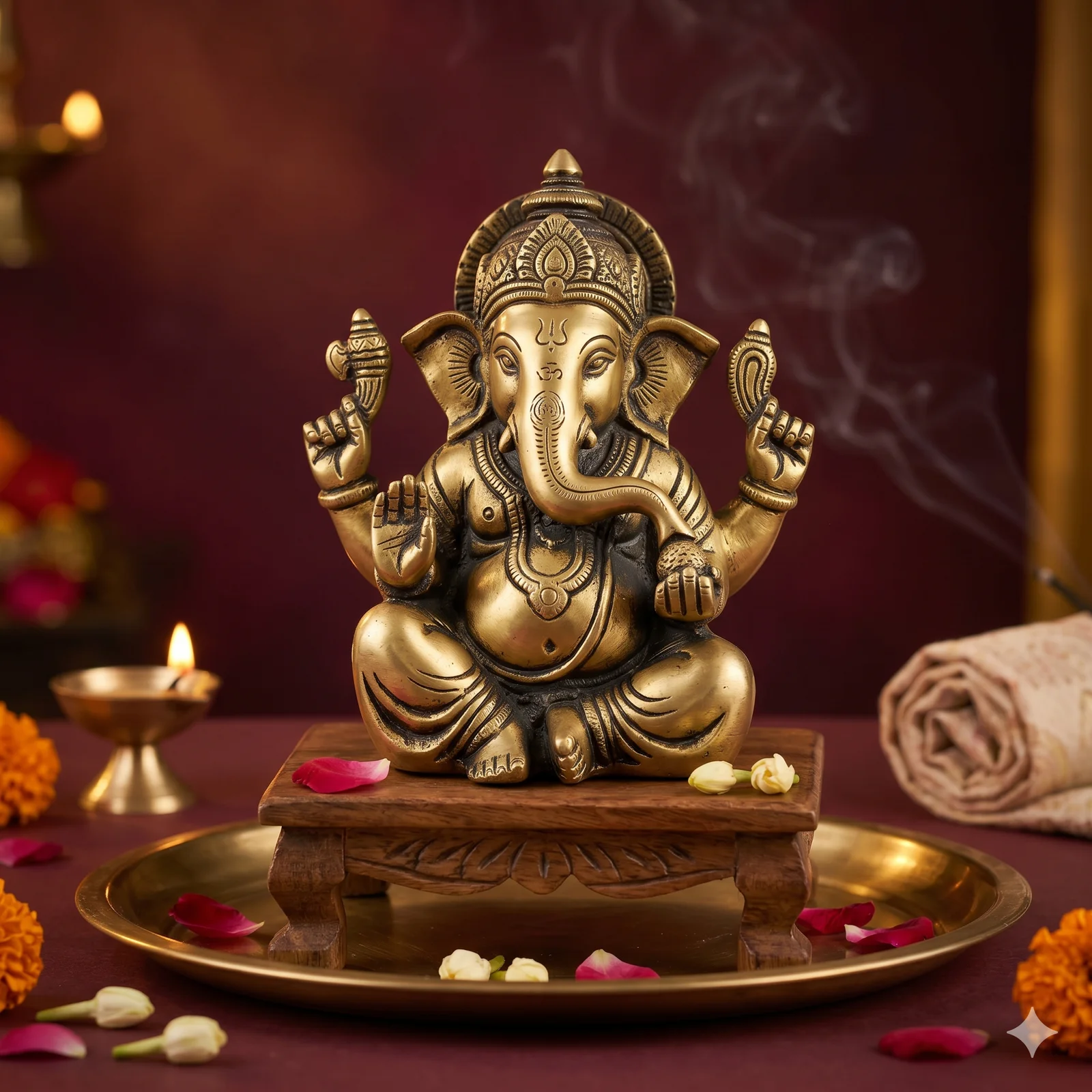
If this is your first puja corner, start with a single murti of Ganesha. He is invoked first in every Hindu ritual as the remover of obstacles, and a small brass Ganesha sets the tone for everything else you add later.
Hand-cast solid brass Ganesh in classical seated form — the remover of obstacles, the patron of new beginnings.
The flame: pick the right diya
For a beginner, an akhand jyot diya is ideal — its tall design protects the flame from drafts, and a single filling can hold the light through your full ritual. Once you're comfortable, a panchmukhi (5-wick) diya is wonderful for evening aarti.
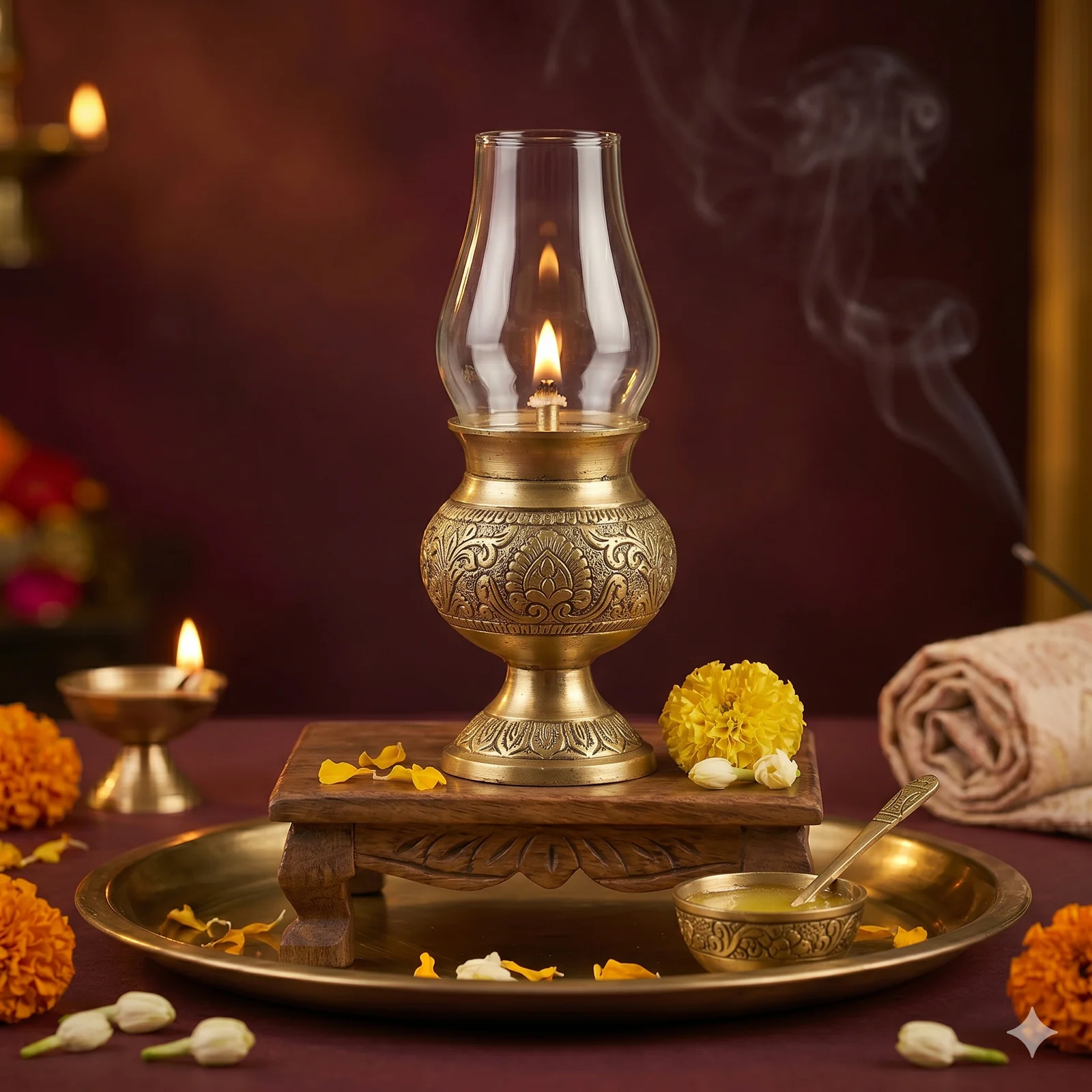
Glass-chimney brass oil lamp designed to burn unbroken through Navratri, Diwali, or any sankalpa — the unflickering flame.
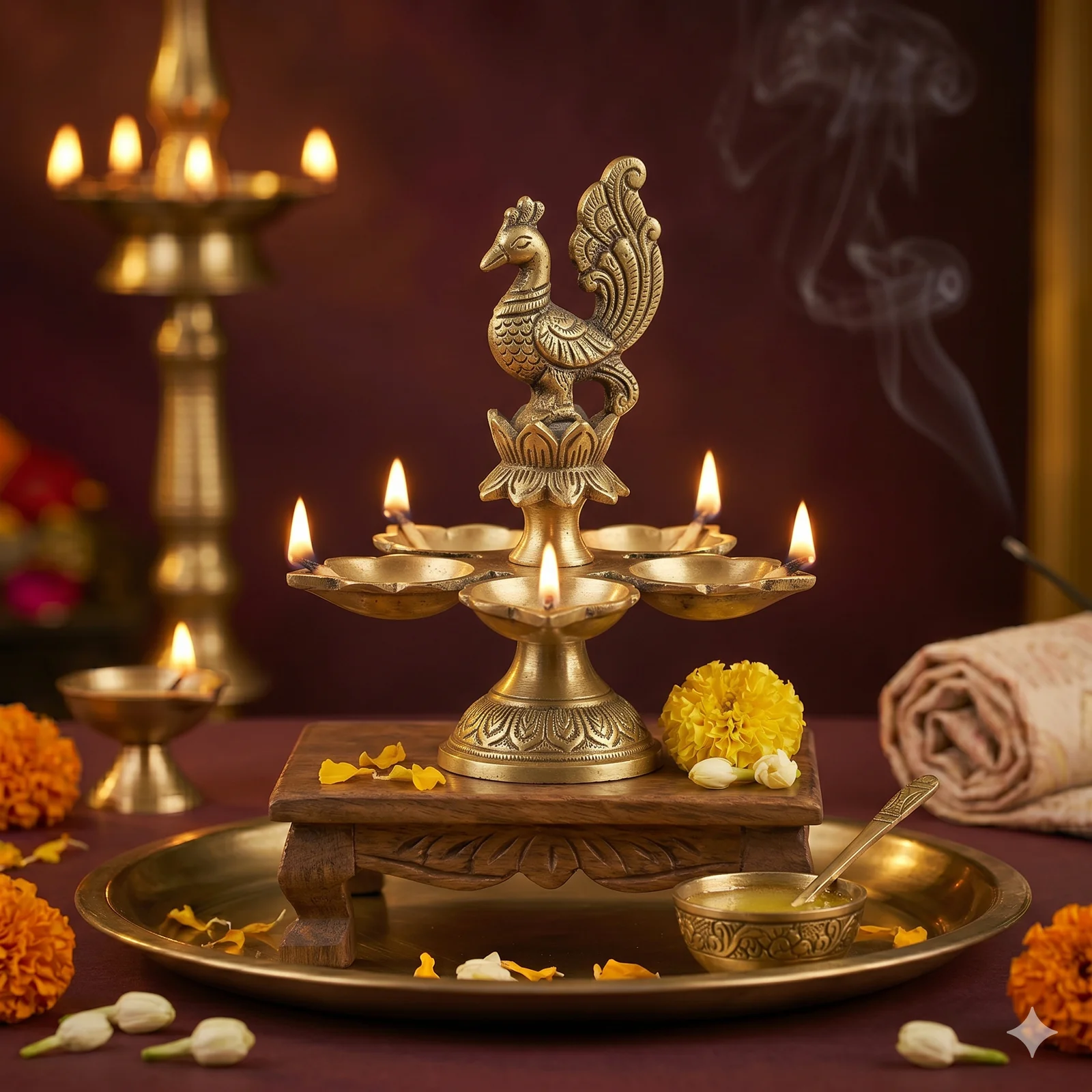
Five-wick brass aarti lamp with peacock finial — the classical aarti vessel of every Indian temple.
Ghee and wicks
The fuel matters. A2 cow ghee burns with a clean, golden flame and is considered sattvic — it doesn't blacken the lamp or your murti. Pair it with long cotton wicks; they last 30–40 minutes per lighting.
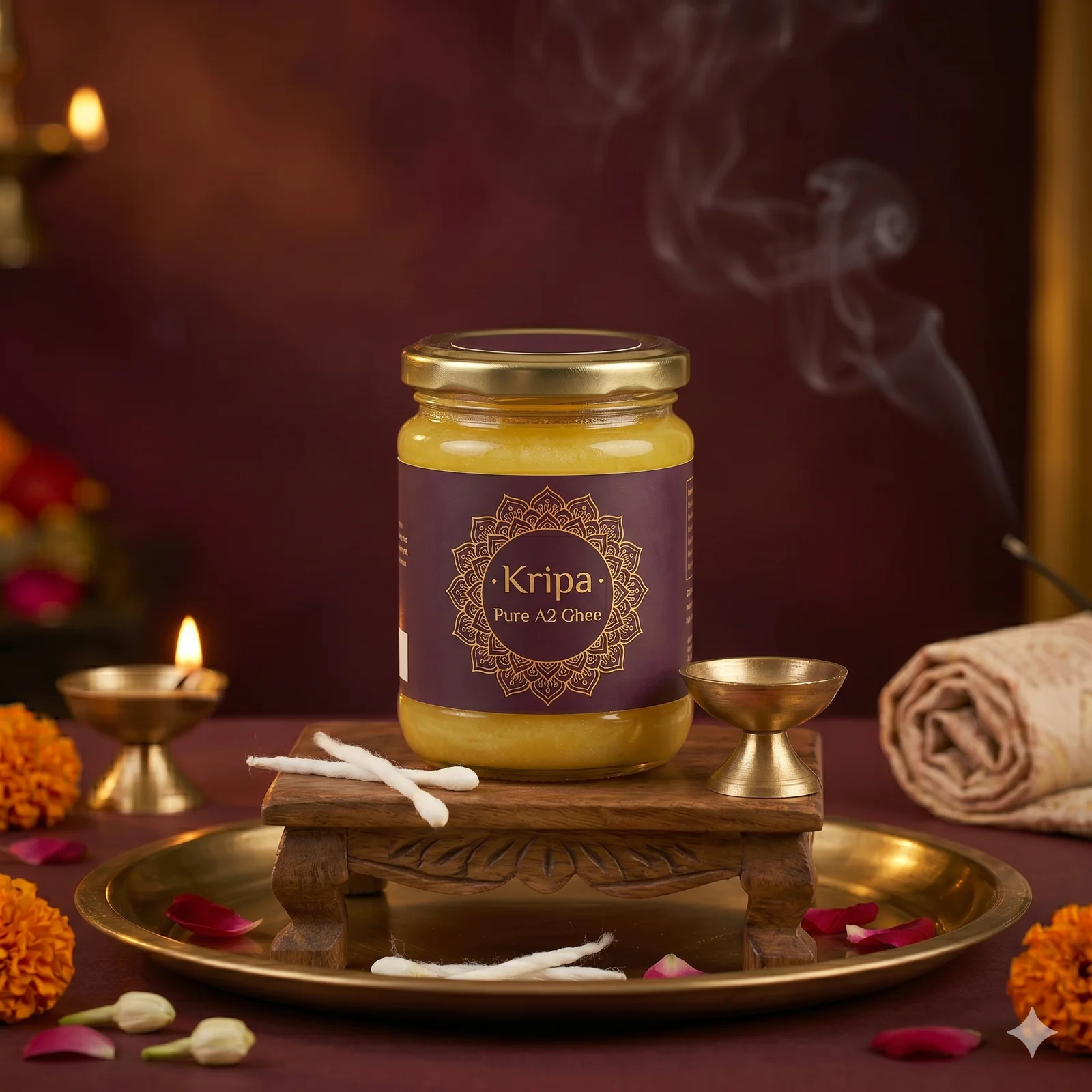
Bilona-churned A2 cow ghee — the pure ghee for diya, abhishekam, and Ayurvedic anointing. Liquid gold from indigenous breeds.
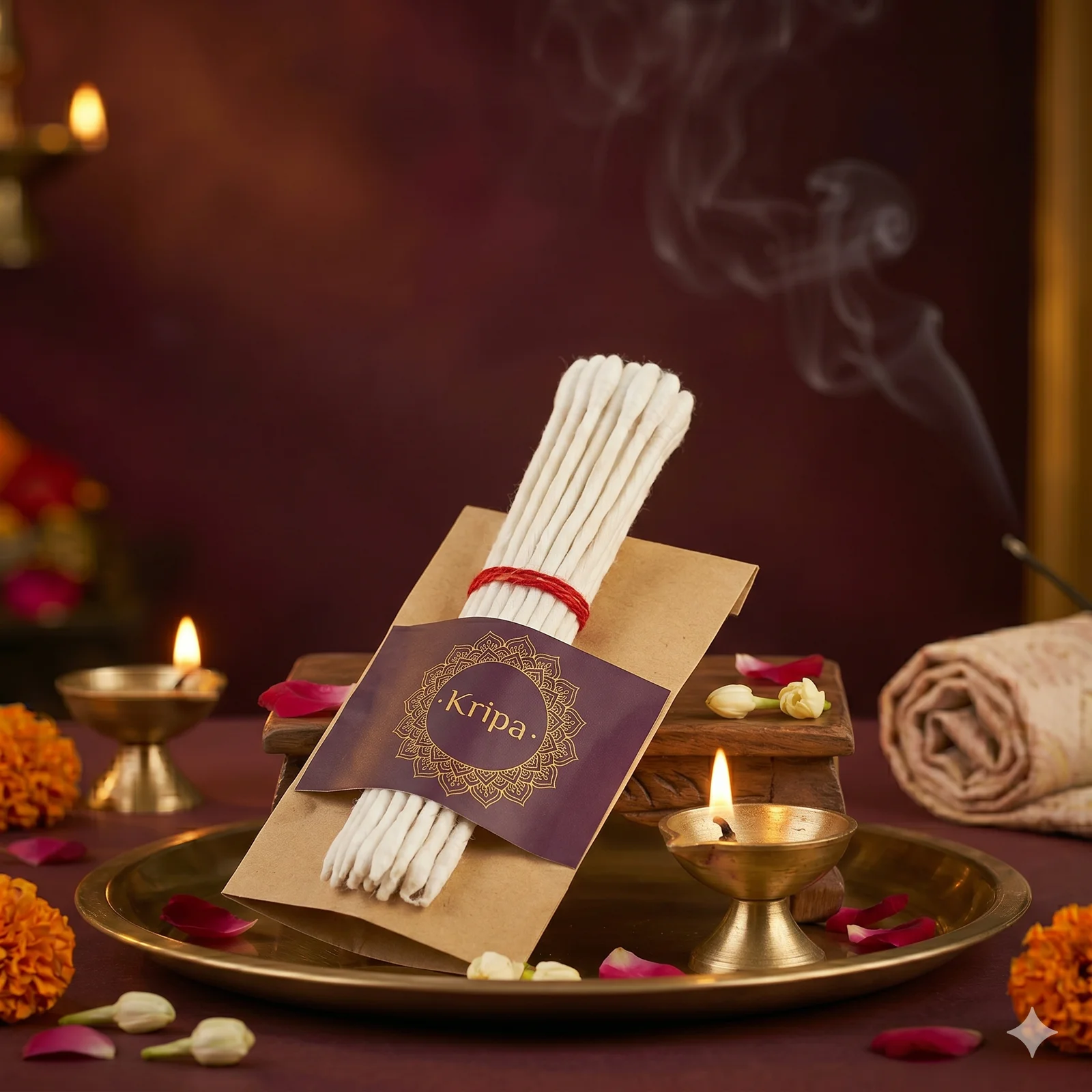
Hand-rolled long cotton wicks (batti) — the soft white thread that carries the sacred flame.
Fragrance: the final layer
An agarbatti at the end of the puja completes the offering of all five elements (earth, water, fire, air, ether). Choose a fragrance you naturally feel calmer around — most people start with sandalwood or rose.
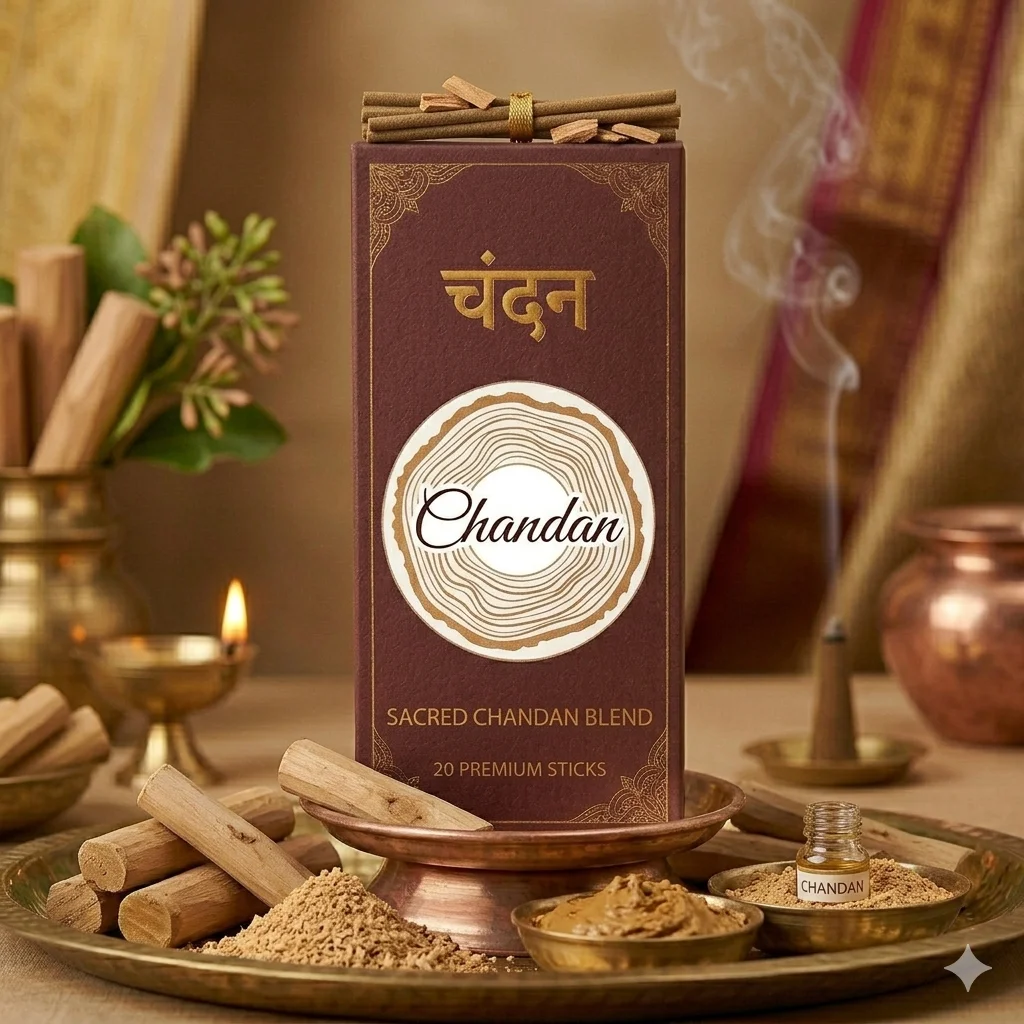
Pure Mysore sandalwood incense — creamy, balsamic, meditative. The sage's incense.
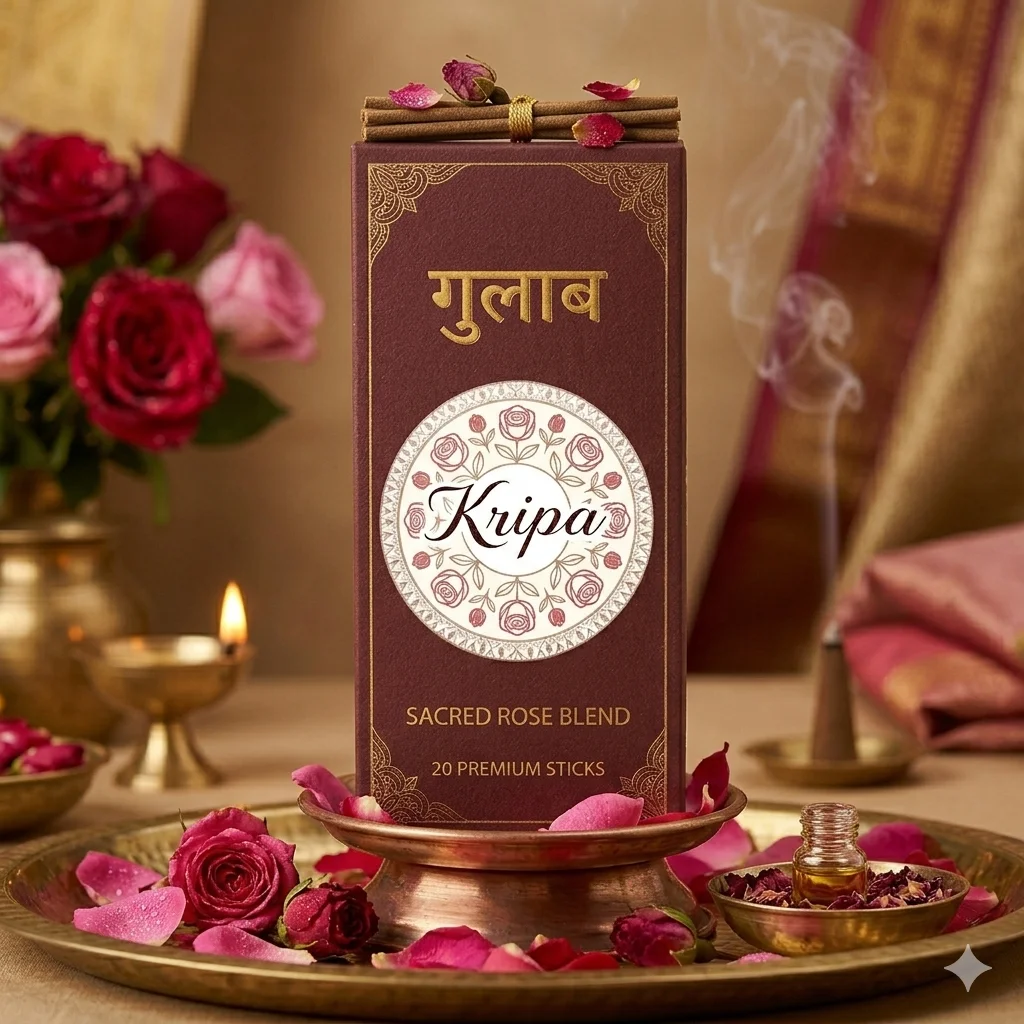
Damask rose petal incense — soft, floral, and unmistakably feminine. The fragrance of every Lakshmi puja.
A 10-minute morning ritual
Once everything is in place, here is a sequence you can follow every morning. It takes about ten minutes and costs you nothing in willpower once it becomes habit:
- Wash and sit — a quick splash of cold water on your face and hands, then sit cross-legged facing the murti.
- Light the diya with a slow inhale.
- Light the agarbatti from the diya flame and place it in the holder.
- Chant once — the Ganapati invocation, the Gayatri mantra, or simply "Om" three times.
- Sit in silence for two minutes. Watch the flame, watch the smoke. Don't try to think.
- Pranam with both palms folded, then gently extinguish the agarbatti (the diya can stay).
One small upgrade per month
Resist the urge to buy everything at once. A puja corner grows organically — a Lakshmi murti when Diwali approaches, a small bell for aarti, gangajal for special occasions. Each addition deepens the practice instead of cluttering it.
That's the whole secret: start tiny, sit daily, and let the corner ask you for what it needs next.